
Cinematography Techniques for Rendering VR/XR Environments into 2D Videos
may 08, 2024
Cinematography Techniques for Rendering VR/XR Environments into 2D Videos
Hello - I'm Curtis Huisman, founder of SENSORED, where we specialize in dynamic storytelling through innovative visual content. I'm excited to share insights into an important aspect of our work—translating the immersive depth of 3D environments into compelling 2D cinematic experiences. This approach bridges the gap between advanced virtual technologies and traditional filmmaking, opening up a realm of creative possibilities.
Our focus will be on how we can apply traditional film techniques—like camera movements, and shot types,—within 3D virtual environments to create engaging 2D outputs. Whether you're producing videos, commercials, or narrative films, these skills are essential for anyone looking to incorporate elements of virtual cinematography into their workflow.
We'll explore various camera techniques that allow us to capture impossible shots with precision, discuss how to maintain cinematic quality during the transition from 3D to 2D, ensuring the final product resonates with its audience on any screen.
I encourage you to engage, ask questions, and think about how these techniques can be integrated into your own projects. My goal is for you to leave here inspired to explore new dimensions in filmmaking and to push the boundaries of what traditional cameras can achieve.

3D ANIMATION PROJCECT SHOWCASE
REZZ SPIRAL TOUR 3D STAGE VISUALIZATION
Explore the REZZ Spiral Tour Promo Visuals, a project by SENSORED that showcases our expertise in transforming vibrant 3D stage environments into compelling 2D visuals.
This work illustrates how advanced cinematography and editing techniques can bring a virtual concert experience to life, enhancing fan engagement and broadening the visual impact of live performances. Experience the seamless integration of 3D animation, creative direction, and immersive storytelling.
Creating an Immersive Experience
Engagement through Cinematography
In traditional filmmaking, cinematography is more than merely capturing images; it's an art form that tells a story through the visual medium. Cinematographers utilize a variety of techniques—such as composition, lighting, focus, and audio—to evoke emotions and guide the viewer's attention. But cinematography isn't just about what you see; it's about what you feel, what you hear, and where you believe you are. When these techniques are translated into VR/XR, they not only enhance visual storytelling but also deepen user engagement, making experiences more immersive and emotionally compelling.
In VR/XR, maintaining this level of engagement is crucial, especially when capturing or rendering scenes for traditional non-360 video formats. Whether these are cutscenes used in-game to advance a story or promotional materials created to showcase your work, the principles of traditional cinematography play a vital role. Directing the viewer’s journey, keeping content dynamic and engaging, and employing virtual cinematography are essential for translating the immersive qualities of a VR/XR experience into a compelling 2D narrative. This approach not only retains the viewer's interest but also ensures the emotional impact of the VR experience is conveyed effectively in a format accessible to a broader audience.
Camera Movements and Shot Types
In the realm of virtual cinematography, especially when translating 3D VR/XR environments into 2D outputs, mastering camera movements and shot types becomes essential. This technique uses virtual cameras within a 3D space to craft scenes that are later rendered into flat videos, allowing for creative flexibility that surpasses physical camera limitations. Filmmakers can achieve dramatic, impossible shots with precision, making the virtual realm a playground for cinematic experimentation.
Shot Types

Establishing Shots
Establishing shots are wide-angle views that set the scene at the beginning of a sequence, providing viewers with context about the location and time. These shots are essential for setting the stage and giving the audience a sense of scale and orientation. By showcasing the environment before narrowing down to specific actions or characters, establishing shots help ground the story within its setting and can subtly introduce key narrative elements that define the mood or theme of the unfolding action.

Medium Shots
Medium shots capture characters from the waist up, balancing facial expressions with their surrounding environment. This shot type is pivotal in scenes where interaction and dialogue play key roles, as it maintains a personal connection with the character while still providing context about their immediate setting. Medium shots are ideal for conveying emotions and reactions within a broader narrative context, making them a staple in both conversational and action sequences.

Close-up Shots
Close-up shots focus tightly on a subject or a specific detail, such as a character’s face, to capture subtle emotions and reactions. These shots are used to draw the viewer’s attention to finer details that might be lost in wider shots, heightening the emotional intensity and personal connection to the character or object. Close-ups are crucial for emphasizing critical moments in storytelling, allowing viewers to fully engage with the characters' internal experiences and the significance of particular details.
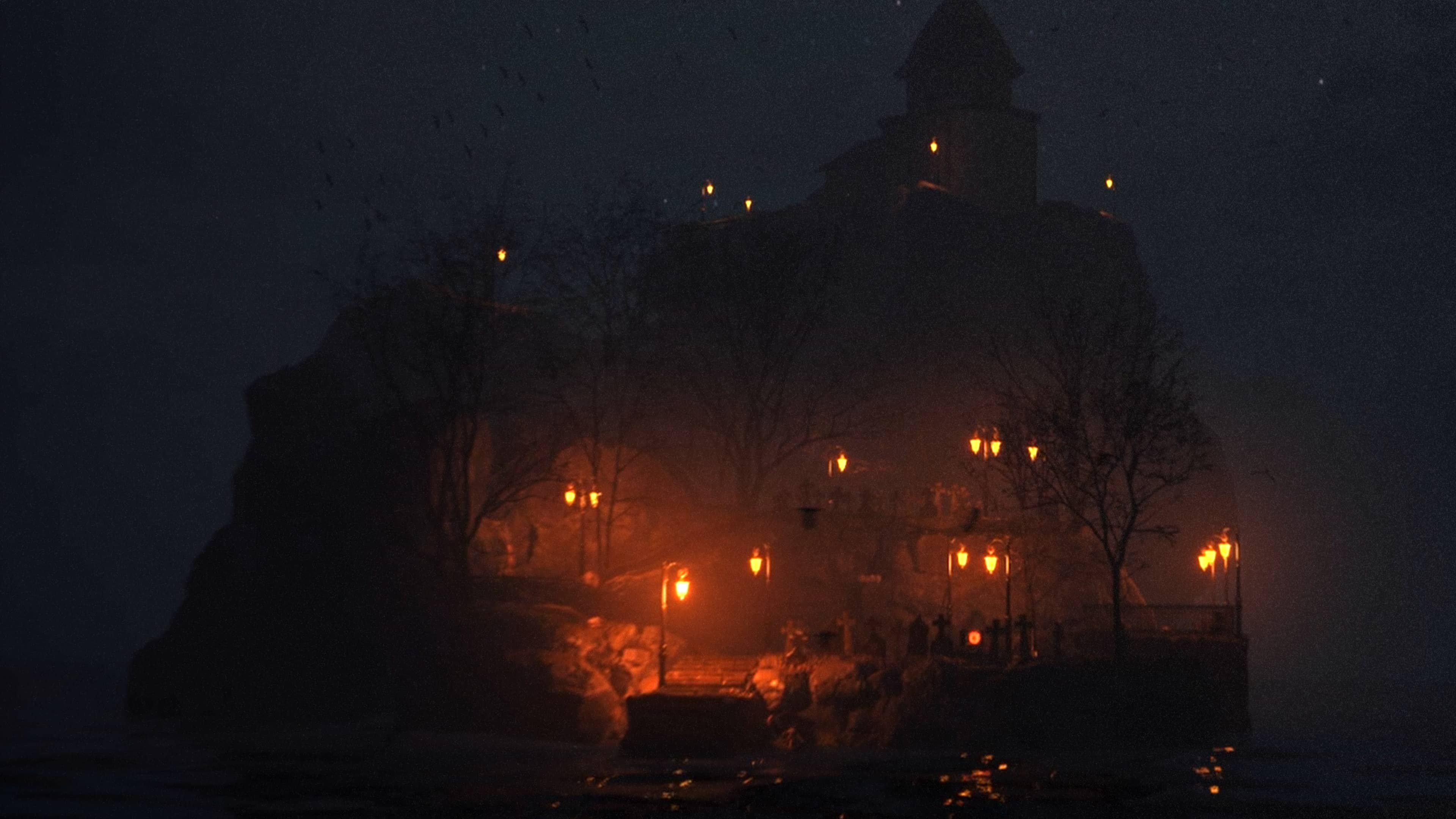
3D ANIMATION PROJCECT SHOWCASE
HALLOWEEN ISLAND
Dive into Curtis Huisman’s personal project, an immersive Halloween-themed virtual environment crafted in Unreal Engine. Centered around an analog TV, this scene merges vintage and modern technologies by featuring real analog glitch effects on the TV screen, set against a backdrop of ominous, Halloween-style visuals.
This project demonstrates Curtis' mastery of virtual cinematography. Through a variety of camera movements like push-ins, reveals, and orbits, along with strategic use of different focal lengths, the piece dynamically presents the 3D environment in a captivating 2D format.
Ideal for illustrating how diverse camera techniques can enhance the storytelling and visual appeal of digital content, this work serves as a perfect example of blending the old with the new to create a uniquely eerie atmosphere.
Camera Movements & Techniques

Push-In
A push-in is when the camera physically moves closer to the subject or object in the scene. This movement is often used to create a sense of intimacy, urgency, or importance. By moving the camera closer, the viewer feels as though they are moving into the personal space of the subject, which can heighten emotional impact and draw attention to details that might not be as visible in a wider shot.

Pull-Out
Conversely, a pull-out involves the camera moving away from the subject. This movement can be used to reveal more of the environment around the subject, place the subject in context, or decrease the emotional intensity of a scene. It provides the viewer with a broader perspective and can be used to transition from focusing on specific details to understanding the bigger picture.

Tracking
A tracking shot involves the camera physically moving along a fixed path in order to keep a moving subject in frame or to travel through a location. This technique is used to maintain continuous action and provide a seamless flow in the visual narrative, immersing the audience in the environment or maintaining close engagement with the characters.

Orbit
The orbit camera movement involves circling the camera around a central subject, keeping the subject in focus while the background changes or shifts perspective. You can also add a push-in or pull-out to create a dynamic arc effect.

Parallax
The parallax effect occurs when objects at different distances appear to move at different speeds relative to the viewer's perspective. In cinematography, this effect is achieved by dollying or tracking the camera parallel to the subject or scene, causing foreground elements to move across the frame faster than background elements. This movement creates a heightened sense of three-dimensional depth and dynamism in the shot.

Reveal
The reveal shot starts with the camera focused on a specific part of a scene—often something unassuming or intentionally misleading—and then moves to unveil a larger picture or a crucial detail that changes the viewer's understanding of the scene. This movement can be executed through various methods such as a pan, tilt, dolly, or even a crane lift, depending on what needs to be revealed.

Low-Angle
A low-angle shot involves placing the camera below the eye level of the subject and angling it upwards. This perspective makes the subject appear larger, more imposing, or significant within the frame. It can exaggerate features and create a sense of heroism, power, or threat, depending on the context.

Aerial
Overhead aerial shots involve capturing footage from a high elevation, looking directly down or at a slight angle towards the ground. This perspective is typically achieved using drones, which can freely move above the scene to capture expansive views or detailed overhead imagery. Such shots are invaluable for establishing the scope of a setting, showing spatial relationships in a scene, and adding a dramatic, cinematic quality to the footage.

POV
POV shots simulate the first-person perspective of a character or an entity within the film, game, or virtual environment, allowing the audience to see what the character sees. This technique can be achieved by positioning the camera so that it represents the character’s line of sight, essentially making the camera their 'eyes.' In virtual environments, this is often used to heighten immersion, making users feel as if they are directly interacting with the digital world.

FPV
FPV shots simulate the viewpoint of an action as if experiencing it firsthand, typically at high speeds and with agile movements, akin to what one might see through the eyes of a drone. This technique involves the camera moving through complex environments, often navigating tight spaces or performing acrobatic maneuvers that a human couldn't achieve. FPV drone style specifically refers to shots that mimic the high-speed, dynamic flying characteristics of a drone piloted from a first-person perspective.
Techniques & Considerations
Pacing and Flow
Pacing refers to the speed at which a story unfolds, while flow concerns how smoothly the story's events and scenes connect. Together, these elements create the rhythm of the narrative, affecting the viewer's emotional response and engagement with the content. Effective pacing and flow can maintain viewer interest, build tension, or provide relief after intense sequences.
Speed of Camera Movement
The speed at which the camera moves during a shot can convey various emotional tones and narrative cues to the audience. Whether the camera glides slowly through a scene or rushes quickly, each choice impacts the viewer’s perception and the overall atmosphere of the film.
Camera Tilt
A tilt involves rotating the camera along its horizontal axis to point upwards or downwards. This movement adjusts the camera's angle without moving its actual location, changing the viewer's vertical perspective within the scene. Good for adding to reveal shots, or establishing shots for example.
Camera Pan
A camera pan involves rotating the camera horizontally around its vertical axis to sweep across a scene or track movement. Unlike a tilt, which moves the camera's viewpoint up or down, a pan shifts the view from side to side without moving the camera’s physical location.
It is particularly effective in tracking moving subjects, keeping them in continuous view while showcasing their movement through the environment.
Maintain proper framing throughout the pan, especially when following subjects. This involves keeping the subject consistently positioned within the frame to avoid a disorganized or amateurish appearance.
**DO NOT OVERUSE. DO NOT PAN WHILE KEEPING THE CAMERA STATIC**
Zooms
Zoom involves changing the focal length of the camera lens to bring the subject closer or push it away within the frame, without physically moving the camera. This technique can be used to emphasize a subject, adjust the composition dynamically during a shot, or shift the viewer's focus from one subject to another. Zooms can impact the emotional tone of a scene, either by creating intimacy as the camera zooms in or by revealing context as it zooms out.
- typically I try and move the camera position closer or further from the object before zooming in or out
Focal Length
Focal length refers to the capability of a lens to magnify the image of a distant subject. Different focal lengths can dramatically alter the perception of a scene in terms of magnification, depth of field, and field of view. Wide-angle lenses (shorter focal lengths) capture a broader view and exaggerate depth, making them ideal for expansive scenes, while telephoto lenses (longer focal lengths) compress spatial relationships and are excellent for isolating subjects.
- use a variety of focal lengths from shot to shot to keep things interesting
- sometimes I render the same shot using multiple focal lengths, then when I'm doing the final edit I'll go with whichever feels right
- this is also important if you have deliverables with different aspect ratios, often we deliver in both horizontal and vertical final edits and having the option to include wider shots when formatting the video to a vertical aspect ratio is good to have
Camera Shake
Camera shake refers to the natural or intentional jostling of the camera during filming, often used to create a sense of action, urgency, or realism. While excessive shake can be disorienting, when used judiciously, it can enhance the immersive experience, particularly in action sequences or to convey a character's point of view under duress.
Experimentation
Experimentation in cinematography involves trying out new techniques, camera settings, movements, or conceptual approaches to find unique ways to tell stories visually. This can include combining unconventional shot types, using innovative technology, or applying creative post-production effects. Experimentation pushes the boundaries of traditional filmmaking to discover fresh, engaging ways to capture and convey narratives.
- The reason you started working with VR/XR
- You are free from many of the limitations that traditional cinematography faces.
- In your virtual environment, you are able to keyframe your camera with precision and replicate your shot over and over to get it just right
